
Let's talk seats, PPE, pain, and why you aren't crazy. The trucking industry has made enormous strides in vehicle safety. Yet one of the most overlooked safety risks isn't under the hood or on the highway — it's whether the person behind the wheel was ever considered in the design.
The cab you're climbing into was largely designed around the average male body. That doesn't mean manufacturers intentionally ignored women. It means the trucking industry, like many industries, evolved around a workforce that was overwhelmingly male. Seat dimensions, steering wheel placement, pedal reach, safety equipment, workwear, and even assumptions about how a driver's body moves have historically reflected that reality.
As more women enter trucking, and as more women stay in the profession longer, we have an opportunity to stop treating discomfort as something drivers simply "get used to." Because pain isn't a rite of passage — it's often a sign that something isn't fitting the person doing the job.
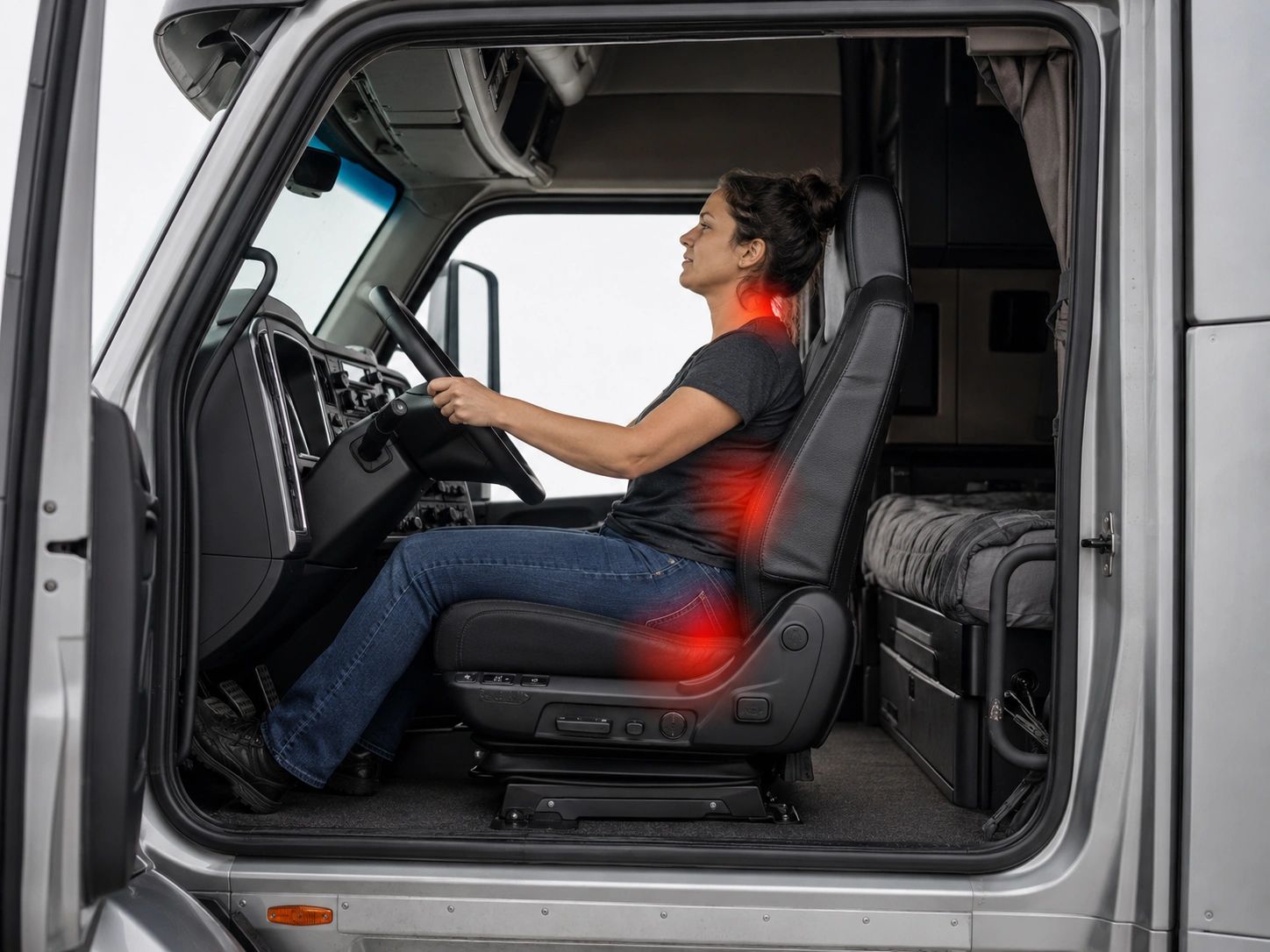
One of the most common comments you'll hear from women drivers is, "I thought it was just me." Your hips hurt, shoulders ache and you can't get comfortable. The seat never feels right and the steering wheel is either too far away or too close, and the seat belt cuts across your neck. By the end of the day, your lower back is on fire. These aren't isolated complaints. They're common ergonomic challenges that occur when a workplace isn't designed around the diversity of the people using it.
Research has consistently shown that prolonged sitting is associated with increased risk of low back pain, neck pain, reduced circulation, cardiovascular disease, obesity, diabetes, and musculoskeletal disorders. Professional drivers face many of these risks because they often spend eight to eleven hours — or more — behind the wheel on a typical workday. Women may experience additional challenges because of differences in pelvic anatomy, hip width, shoulder breadth, body proportions, and average stature. When a seat, steering wheel, or pedal position doesn't properly accommodate those differences, the body begins compensating. Over time, those small compensations can become chronic pain.
An uncomfortable seat isn't simply annoying — it's an ergonomic exposure. If the seat cushion is too long, shorter drivers may not be able to sit fully against the backrest without pressure behind their knees. Limited lumbar adjustment can leave the spine unsupported, while poorly positioned armrests often contribute to shoulder and neck fatigue. Drivers frequently compensate by leaning forward, shifting weight to one hip, or sitting in awkward positions for hours at a time. Those adjustments may provide temporary relief but often increase strain elsewhere in the body.
The conversation about fit extends beyond the driver's seat. Many women continue to struggle with safety vests that bunch at the shoulders, gloves that reduce dexterity, boots that create pressure points, and rain gear that restricts movement. Poorly fitting PPE isn't just uncomfortable — it can create additional ergonomic stress and, in some cases, reduce the level of protection the equipment is intended to provide. If a shoulder belt consistently rubs across the neck because of body proportions, some drivers may be tempted to position it incorrectly, introducing additional safety risks during a crash.
This is the conversation that rarely happens in trucking. The average age of menopause in the United States is approximately 51, and many women experience symptoms for several years before and after that transition. At the same time, the trucking workforce is aging, meaning more women behind the wheel are navigating menopause while working long hours in environments that can already be physically demanding. Hot flashes inside a truck cab during the summer, joint pain that makes climbing in and out of the cab more difficult, sleep disruption from night sweats — these aren't signs that someone is no longer capable of doing the job. They're normal physiological changes that deserve the same practical problem-solving approach we apply to any other workplace challenge.
Many discomfort issues can be improved by taking a few minutes at the start of each shift to properly adjust the driver's workstation. A properly adjusted seat should allow the driver's back to remain supported while comfortably reaching the steering wheel with a slight bend in the elbows. Pedals should be reachable without stretching, and knees should remain slightly bent rather than fully extended. Mirrors should be adjusted after the seat position is finalized, not before.
Carriers can make meaningful improvements by specifying trucks with highly adjustable seating systems and steering columns, including ergonomic education during driver orientation, offering properly fitting PPE in a full range of sizes, and creating a culture where discussing pain leads to problem-solving rather than being dismissed as "part of the job."
The trucking industry has made tremendous strides in recruiting more women, but recruitment is only part of the equation. Retention depends on creating work environments that recognize the diversity of the people behind the wheel. If you've ever wondered why your body hurts after a shift while someone else says, "I've never had that problem" — you're probably not imagining it. The equipment wasn't necessarily designed around your body. The good news is that this isn't an unsolvable problem. Better ergonomics, properly fitting PPE, thoughtful cab design, and open conversations about women's health can improve comfort, reduce injuries, and help more women build long, healthy careers in trucking. The goal isn't to redesign trucking for women. It's to recognize that a safer industry is one that works for everybody.