
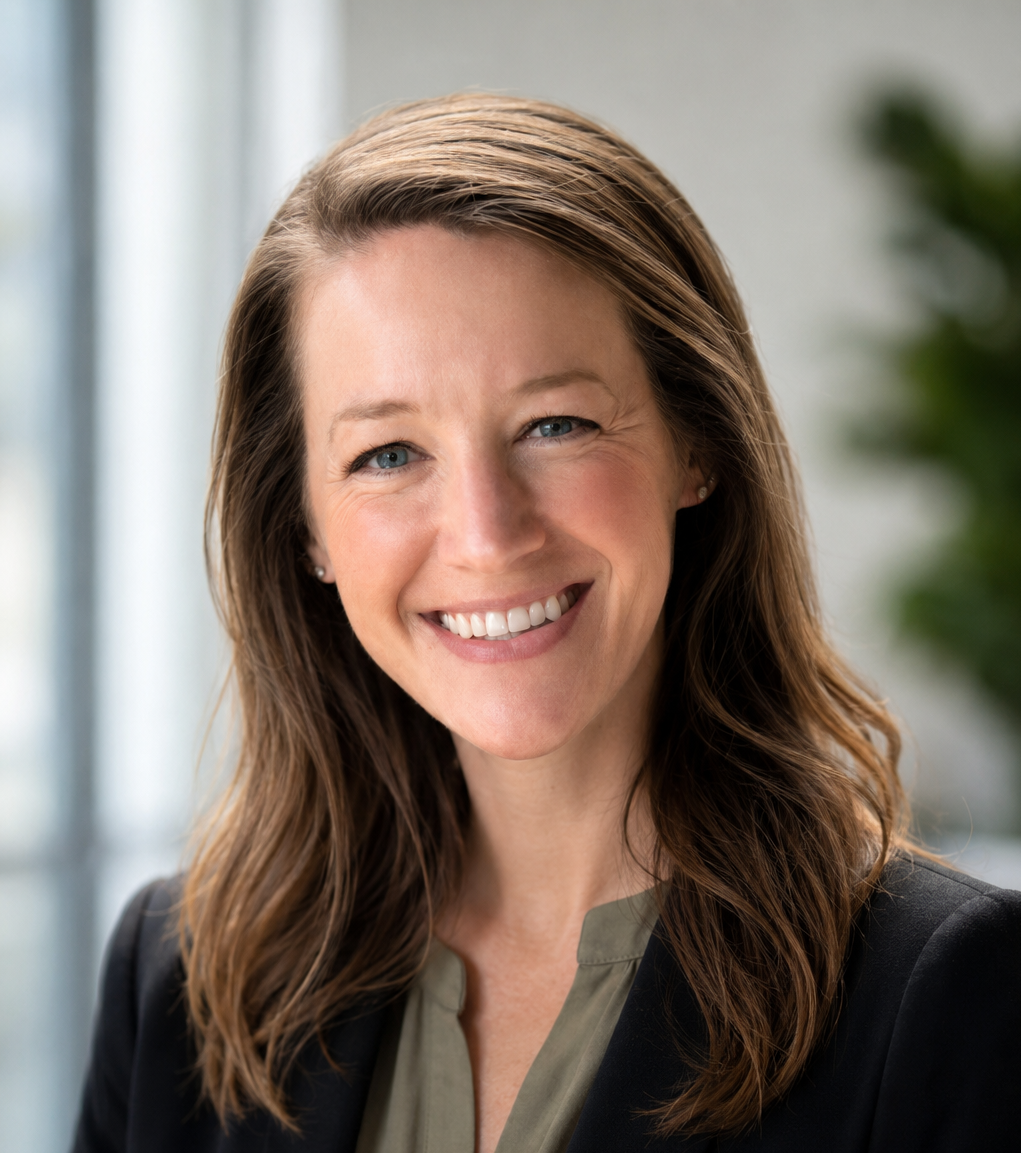
Lindsey Bryan's work has always centered on helping people — especially when change is hard, life is messy, and the "right" answer on paper doesn't fit the reality in front of them. Now Health & Wellness Manager at PROJECT 61, she brings four years of transportation experience along with a background in addiction counseling, social work, inpatient psychiatric rehabilitation, nutrition counseling, and driver health education. Her own experience with chronic illness has made that work even more personal, shaping an approach built on listening, empathy, and meeting people where they actually are rather than where a textbook says they should be.
In our conversation, Lindsey opened up about the experiences that shaped her work, the lessons she has learned from others, and why empathy remains at the center of everything she does.
The last time you and I talked, you were leading health and wellness work with the St. Christopher Truckers Relief Fund. Today, you are with PROJECT 61. What changed between those two conversations, and what made this the right next chapter for you?
I had the opportunity to meet Jeremy Reymer, the founder of Project 61, two and a half years ago and was really struck by his dedication to making an impact on driver health. As Project 61 and Offshift merged, I was excited by the momentum they gained very quickly, and I wanted to be part of it!
What did your years at St. Christopher teach you about professional drivers that you could never have learned from health statistics, research papers, or industry conferences?
I describe truckers as genuine, generous, and blunt as hell. I worked with many drivers on the charity side of St. Christopher Fund who were going through some of the hardest points of their lives after a heart attack, stroke, cancer diagnosis, etc. So many were still in the fight of their lives and were already asking how they could help other drivers. I saw the sacrifices they made and was surprised by how willing they were to continue to give when times were tough.
Was there something you kept seeing in your work with drivers that made you realize education and good intentions alone were not enough?
In many of the classes I taught on topics like activity, sleep, stress management, etc., I found that there was a huge gap between what was ideal and what was reasonable. Even when trying their best, it is incredibly hard to achieve the bare minimum in all of the various health categories we cover. Each week, I would hear about well-laid-out plans that were wrecked by a broken-down truck, a loaner truck without a fridge, and other challenges we couldn't have expected.
Before transportation, your background included addiction counseling, social work, inpatient psychiatric rehabilitation, and nutrition counseling. When you look back now, what thread connects all of those roles to the work you are doing today?
Very simply, helping people! I've always found myself drawn to helping professions. People frequently find themselves in a situation where they want to change, but don't know how, don't know where to start, or don't understand why they are standing in their own way. I enjoy helping to bridge those gaps.
You have spent much of your career working with people who may be dealing with illness, addiction, mental-health challenges, chronic conditions, or major life disruption. How has that changed the way you respond when someone is labeled "noncompliant," "unmotivated," or accused of simply making bad choices?
I look at labels like "noncompliant," "unmotivated," or my least favorite, "lazy," as a misrepresentation of the person. I can't imagine anyone saying they don't want to feel better, to have more energy, to reduce their health risks. When that is our starting place, we simply need a better plan! We can all relate to buying vegetables only to throw them away when they go bad. We were motivated enough to buy the vegetables, but we didn't have an adequate plan for the time to prepare them, how to cook them, what to pair them with, or how to add flavor. We may not have thought about our energy level after work to prepare the vegetables, previously made plans that involved eating out, or the curveball of the truck fridge going out. From the outside, it would be easy to frame this as, "I am not eating enough vegetables," but motivation or compliance weren't part of the barriers here.
Was there ever a point in your own health journey when you felt dismissed, overwhelmed, frightened, or frustrated by advice that sounded simple on paper but was difficult to live in the real world?
Absolutely! In my early 20s, I met with a rheumatologist who seemed to think my symptoms were something I was imagining. I hadn't yet learned how to advocate for myself in a medical setting, and because she was so insistent that my lab work was normal, I convinced myself nothing was wrong. She suggested that I try Tai Chi, some breathing exercises, and spending more time with my friends. I left that appointment and decided I was going to do exactly that! And, to no one's surprise except the doctor's, I sent myself into a terrible flare-up shortly after and fell asleep at the wheel. I was very lucky that no one was seriously injured. That feeling of being dismissed and how easily I was convinced that I must be imagining my symptoms because a professional said so will always stick with me.
Do you think your own experience with chronic illness makes you less likely to blame people when change is slow, inconsistent, or messy?
I am a much more empathetic person because of my own experience. I really hear people when they say they were too tired, too overwhelmed, or in too much pain to accomplish their goals for the week. Life is hard, and habit changes don't happen in a vacuum without stress and responsibilities. I tend to believe that if people are willing to attend a class or an appointment, to be held accountable, that they're trying their best.
After years of working directly with professional drivers, what do you believe the trucking industry still fundamentally misunderstands about why drivers struggle with their health?
In general, we tend to believe that health is a personal responsibility and a choice. There is a grain of truth in that, but health is also affected by systems in place. We see this truth in statistics quite often — there are geographical pockets where people are more likely to be deficient in vitamin D, more likely to be diagnosed with cancer, more likely to experience depression. That doesn't mean that an entire group of people simply made choices that created any of those health outcomes. What we tend to forget about is availability. This can include availability of healthy foods, ease of preparing foods, access to medical care, leisure time outside of work hours, and more. More times than I'd like to admit, I've met drivers who weren't able to attend medical appointments consistently and were diagnosed with a much more advanced case of a disease because of that limitation alone.
Where is the line between personal responsibility and industry responsibility? What does a driver genuinely control, and what conditions are being created by schedules, parking, food access, detention, fatigue, isolation, benefits, and access to care?
I have a really unique vantage point in that I get to see just how much a company can impact a driver's health. Commercial truck driving is a demanding job, and it's not realistic to expect a company to support every single piece of a driver's health. However, it can make a really significant difference aiming for pick-up and delivery times that allow for a routine sleep schedule, ensuring the driver has the equipment they need for food storage and preparation such as a mini fridge and a power inverter, as well as some flexibility to fit in a medical appointment — a later start on Monday isn't too big of an ask. This allows the driver to take control of their health in meaningful ways versus trying to survive their environment.
You have recently been involved in conversations around women's preventive health, including cervical cancer screening access for drivers. Where does the trucking industry still fail to account for the fact that women behind the wheel may face health-access barriers that are different from men's?
Women's health is a topic I'm especially passionate about. Statistically speaking, women have additional barriers to adequate healthcare before we even factor in profession. Health studies frequently underrepresent women. Women face higher rates of pain and symptom dismissal. A wide variety of health conditions such as autoimmune, cardiovascular, and neurological conditions disproportionately affect women, and often those health conditions are underfunded. A recent study from the World Economic Forum and the McKinsey Health Institute showed that "women experience 25% more years in poor health compared with men." As an employer, it would be easy to become frustrated if a female driver needed more time off for medical reasons than a male driver, but it's important to remember that the female driver's symptoms are less likely to be taken seriously and may require multiple appointments.
You have spent years advocating for other people's health and encouraging drivers to make themselves a priority. Are you personally good at following your own advice?
I am certainly human and have my own health challenges! I believe that I will forever have to put a lot of thought into drinking enough water every day. However, I will never give health advice that I wouldn't follow myself. As a wife and mom, it could be easy to let healthy habits slide, but I set goals for myself just as I do with the drivers I work with each week!
What has working with truck drivers given you that you do not believe you would have found in another population or another part of healthcare and wellness?
One of my favorite parts about working with drivers is that they will accept you just as you are! In many healthcare settings, we have to focus so much on professionalism — and paperwork — that meaningful connection can be lost along the way. I appreciate that drivers tend to be blunt, and in turn, as we build trust together, I'm able to be blunt back. They may not get a perfectly polished textbook answer from me, but they know that I care and will provide them with credible information.
What is something I did not ask that you wish people understood about you, chronic illness, behavior change, driver health, or what it will truly take to help professional drivers live longer and healthier lives?
I truly consider it a privilege to be trusted with the health of such a diverse and important industry. It is not a responsibility that I take lightly. I enjoy the work I do, but I also place a lot of importance on continuing to learn and stay on top of the newest health research and scientific advances. For people who don't work in the health and wellness industry, trying to make changes to support better health can be overwhelming! There is no such thing as a "dumb" question. As humans, we can't know everything, and I have a lot of respect for anyone willing to ask a question to better their health, no matter where we're starting.