
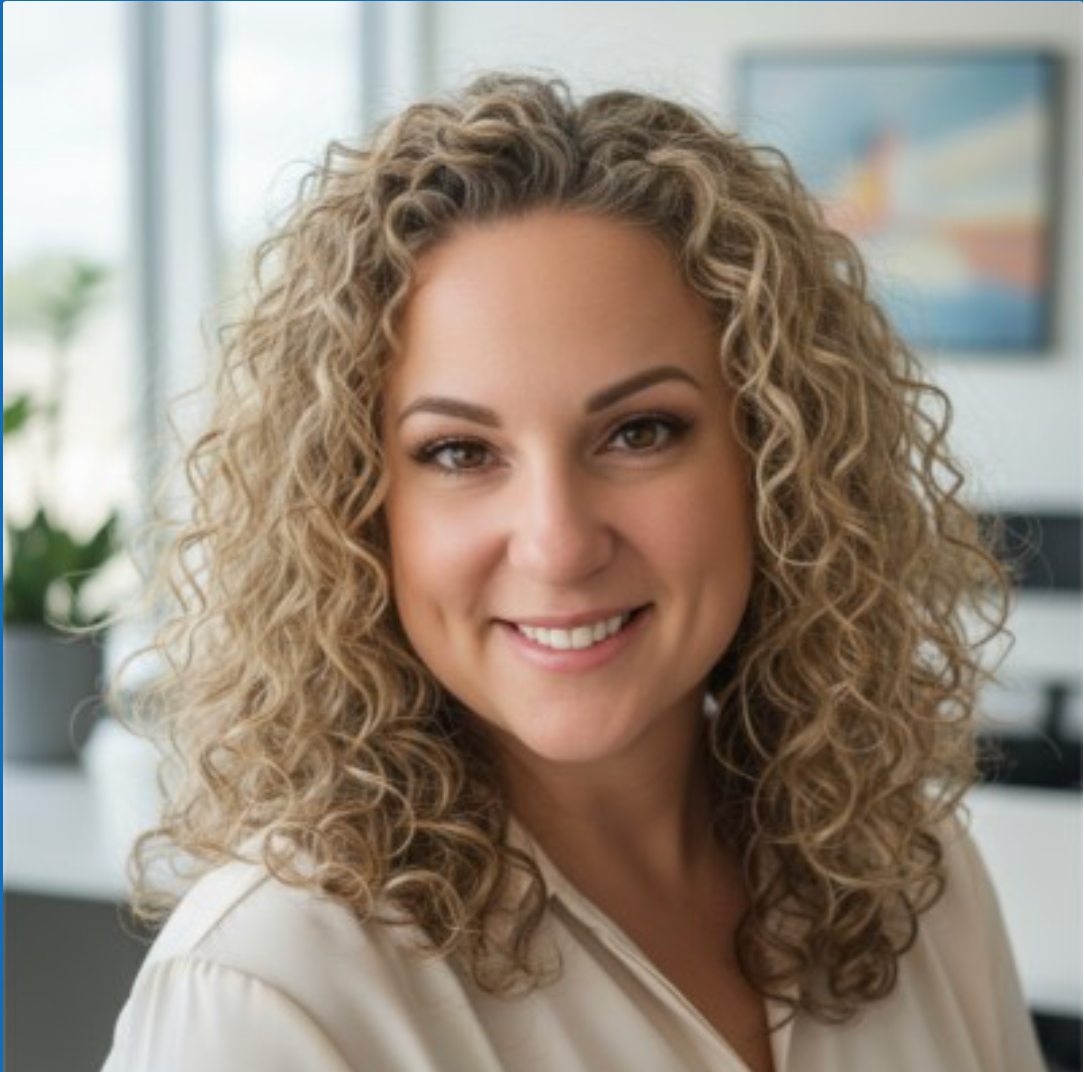
There is an early morning Michaela Clement still carries with her. Called to a head-on collision near her home, she arrived before most of the rescue units. Four young men had been killed. The experience would become what she calls her "Safety Why" — a reminder she has carried throughout more than 35 years in transportation.
But Clement's story is not simply about preventing accidents or enforcing regulations. It is about the people behind the wheel, the weight of deciding when compassion has gone too far, learning to trust her own authority, and eventually discovering that the career she never planned for had become her purpose.
The Industry Chose Me
Take me back to the beginning. How did you first enter transportation, and what did you think your career would look like before safety and DOT compliance became such a significant part of it?
If I'm being completely honest, I don't think many people intentionally choose transportation safety as a career. In my case, the industry chose me.
I grew up around trucking in Southern California. My father spent much of his career in transportation, first working for trucking companies and later owning a trucking company and freight brokerage of his own. Some of my earliest memories include hearing conversations about freight, regulations, customers, and the challenges of running a transportation business. Although I didn't realize it at the time, the industry was already shaping my perspective.
Ironically, I had no plans to follow in my father's footsteps. After his passing at the age of 49, I pursued several different careers and eventually relocated from California to Texas as a single mother of three children.
My return to transportation happened almost by accident. I accepted a position in the billing department of a small East Texas heavy-haul trucking company. Over time, I worked in billing, dispatch, and HR, gaining a firsthand understanding of how transportation operations function behind the scenes.
The turning point came when our company underwent a significant DOT audit. What started as volunteering to help prepare documents quickly became an education in compliance, safety management, and the very real consequences of getting things wrong. I became deeply involved in helping the company develop corrective actions and improve its safety processes.
What surprised me was that I enjoyed the challenge. I found myself drawn to understanding the regulations, identifying weaknesses, and building systems that protected both the company and its drivers.
Over the years, I had the opportunity to help multiple carriers navigate compliance challenges, and eventually I realized that the knowledge and experience I had gained could make a meaningful difference. That's when I stopped viewing safety as simply part of the job and started viewing it as my profession.
Today, transportation safety isn't just what I do — it's the industry I chose to build my career in, and one I hope to remain part of until I retire.
What Drivers Taught Her
Your background appears to include both dispatch and safety responsibilities. What did sitting close to day-to-day operations teach you about trucking that someone entering safety from a purely administrative or regulatory background might never understand?
First and foremost, I think day-to-day operations gave me the opportunity to deal directly with the drivers, to know what they were going through when they would call for no other reason than just to talk and have someone listen. I was given the opportunity to build a lot of strong relationships with quite a few drivers and many of them I still hear from to this day.
Truck drivers are a different breed; they are unlike any other employee type in any other career. Once I was able to build those relationships and they knew that anything that I was asking them to do was for the benefit of the company, there was a level of respect granted. I didn't get nearly as much push back when it came to asking them to adhere to safety requirements.
The Morning That Became Her "Safety Why"
Was there a particular incident, recurring problem, or moment in your career when you realized safety was not simply another responsibility — it was where you wanted to build real expertise?
There was a fatality accident that I was called to early one morning. It happened close to my house, and I could get there the fastest, so the owner called me to be on scene and check on her driver. Four young men were killed that day, and I had arrived before most of the rescue units had arrived. It was a head-on collision and when I asked the officer on scene how he thought it might have happened, he explained that the car that crossed the double yellow line and hit my truck head-on more than likely had no one awake in it at the time of impact, including the driver.
The extreme pain and grief that I felt that morning was nothing compared to what my driver and his wife, who was the passenger, had to deal with. I have used those photos and shared that story during every orientation for every company that I have worked for since then, using that experience as my "Safety Why."
The constant reminder of why what I do is so very important to me and why I need to do everything possible to ensure that no families will have to live through what those four families did that morning.
Learning When Compassion Has Gone Too Far
What did your earliest years in transportation teach you that you later had to unlearn?
The mistakes I made in my early years with transportation included giving drivers a second chance. I know this sounds harsh, but someone must be the one to draw the line and say, "that nuclear multimillion dollar lawsuit is not worth me turning a blind eye this time around." It has become easier and easier to part ways with drivers who do not value safety. Where I once was that naïve safety lady who always rooted for the underdog, I have grown into quite the unwavering Safety Lady when it comes to ensuring the safety of those I work with, and I have found it much less of a challenge to say no.
At what point does accountability become punishment without learning — and at what point does empathy become an excuse for tolerating dangerous behavior?
Accountability should create learning. Punishment without learning usually creates silence.
At the same time, empathy can never become an excuse for accepting dangerous behavior. The longer you are in this business, the more things become very clear. The line between tolerating dangerous behavior and putting your foot down is extremely sharp. Years of thinking, "it wasn't that bad, he has a family that he needs to provide for, it's so close to the holidays" — and making the wrong decision based on empathy — has brought me to the point where I have to look at those decisions as if they are being made for everyone working at this company. It's not just about this driver.
The only way to feel that healthy balance is being able to recognize the difference between a mistake and a choice.
When Risk Hasn't Caught Up With You Yet
What is the most dangerous phrase a safety professional can hear after questioning a practice: "We've always done it this way," "It's never been a problem before," or something else entirely?
For me, it's always been: "We've never had a problem before."
And I say "always" because it is one of those inevitable phrases that most safety people recognize as the terrifyingly uncomfortable statement that really sets the tone for things to come. That phrase can create a false sense of security and is the breeding ground for an extreme amount of complacency.
Many serious incidents happen after years of nothing going wrong. The absence of an accident doesn't necessarily mean a process is safe. Sometimes it simply means the risk hasn't caught up to you yet.
Trust, Technology, and a Little Humor
When does safety technology protect a driver, and when can it create a culture where the driver feels watched rather than supported?
When explaining driver-facing cameras to my drivers, my favorite go-to response is: "Look, there is not enough time in my day to sit around and watch 200 drivers on video, so y'all maybe need to check your egos at the door and let's get to work!" Maybe a little abrasive to some, but it always adds a little bit of levity and realism to the conversation. It also helps to explain to the drivers that the cameras were not installed to be your enemy — you were hired because you were well qualified, and I need the means to protect you when someone says you were "on your cell phone at the time of the crash."
Technology also protects drivers when it provides coaching, context, and support. It creates frustration when drivers believe its purpose is surveillance rather than improvement. If your drivers understand your motive is only for protection, it becomes easier for them to understand the need.
Intent matters, but perception — as well as follow-through — matters more than you can know.
Learning That Not Everything Is Black and White
Has broader industry involvement ever forced you to reconsider a safety issue you once saw in more black-and-white terms?
Absolutely. I think the best safety professionals are the ones who learn from their own mistakes or, even better, take the opportunity to learn from someone else's. The more perspectives you hear, the more you realize that many issues are not black and white — especially when it comes to the differences between state DOT and FMCSA.
You can maintain high safety standards while still appreciating the operational and business challenges others are managing.
Being a Woman With the Authority to Say No
Michaela describes herself as the oldest of five children and jokes that saying "no" was probably built into her DNA. But after decades in transportation, the more revealing part of that story is that even now, she still finds herself thinking about how a message will be received when she is the woman delivering it.
Have there been moments when you felt pressure to soften a safety message so you would not be labeled difficult — or, on the other side, to become harder than you naturally are because you believed anything less would be dismissed?
Yes. I often find it crazy how today in 2026 I still feel like I need to adjust the way I speak, what I say, or the tone I use in order to be taken professionally. But if you think about it, at 60 years old I've been doing it for at least 60% of my life working in this environment. It becomes easier to gauge when those adjustments will be needed, and the response is less of a thought-out, timely process and instead much more natural.
There have been times when I've noticed that women face a narrow space between being considered too soft or too assertive. I've learned that effective safety leadership isn't about being the loudest voice in the room. It's about being the most credible and the most consistent.
Finding Her Purpose
What did building a career in transportation safety give you that you do not believe you would have found in another profession — and what has the responsibility taken from you?
This career has given me purpose.
It's almost funny how, when you become a parent, so much of your purpose becomes wrapped up in your children's lives — football games, cheerleading practices, science fair projects, band concerts, and all the moments in between. Then, almost without warning, they grow up and move out, and you're left asking yourself a question you haven't had to answer in years: What's my purpose now?
When my youngest son enlisted in the Army immediately after graduating from high school, I found myself facing that question once again.
Throughout my life, I've worn many hats. I've worked as a jailer for a small East Texas Sheriff's Office, managed a funeral home, thrown newspapers at four o'clock in the morning, and pursued countless other jobs that I thought might be my calling. Yet through every chapter of my career, one thing consistently found its way back into my life: trucking.
No matter where life took me, transportation seemed to be running quietly in the background. Over the years, I worked in billing, dispatch, HR, compliance, and numerous other areas of the industry. Eventually, I realized that transportation safety brought together everything I valued most — service, problem-solving, accountability, and helping people.
This profession allows me to contribute to something far greater than myself by helping protect drivers, employees, and the traveling public. I have never been someone who seeks recognition or wants to stand in the spotlight. In many ways, safety is the perfect profession for me because much of the work happens behind the scenes. Knowing that our drivers made it home safely to their families at the end of the day has always been reward enough.
At the same time, safety carries a responsibility that follows you home. When your job is preventing bad outcomes, you're constantly evaluating risks that others may never notice. You find yourself thinking about the "what ifs" because your role is to identify potential problems before they become real ones.
The responsibility can be heavy at times, but the purpose it provides far outweighs that burden. Few careers offer the opportunity to make a meaningful impact on people's lives every single day, often without them ever realizing it. For me, that's what makes transportation safety so rewarding. It isn't just what I do; it's how I serve others.
One Final Question
What is something I did not ask that you wish people understood about you, transportation safety, professional drivers, compliance, or what it feels like to carry responsibility for problems you are trying to prevent before anyone else can see them coming?
I wish people understood that transportation safety isn't about enforcement. It's about stewardship.
Most safety professionals are not trying to catch people doing something wrong. We're trying to create environments where people can go home safely at the end of the day.
I also wish people understood how professional drivers truly are. The overwhelming majority of drivers care deeply about safety, and many make difficult decisions every day that the public never sees.
The best safety professionals and the best drivers actually want the same thing: to move freight efficiently, responsibly, and safely.
Michaela Clement, CDS, is a Transportation Safety Manager with 35+ years in transportation and industrial operations. Her industry involvement includes the Texas Trucking Association Emerging Leaders Council, Class of 2026; Women In Trucking Association; and the Dallas Fort Worth Council of Safety Professionals.