
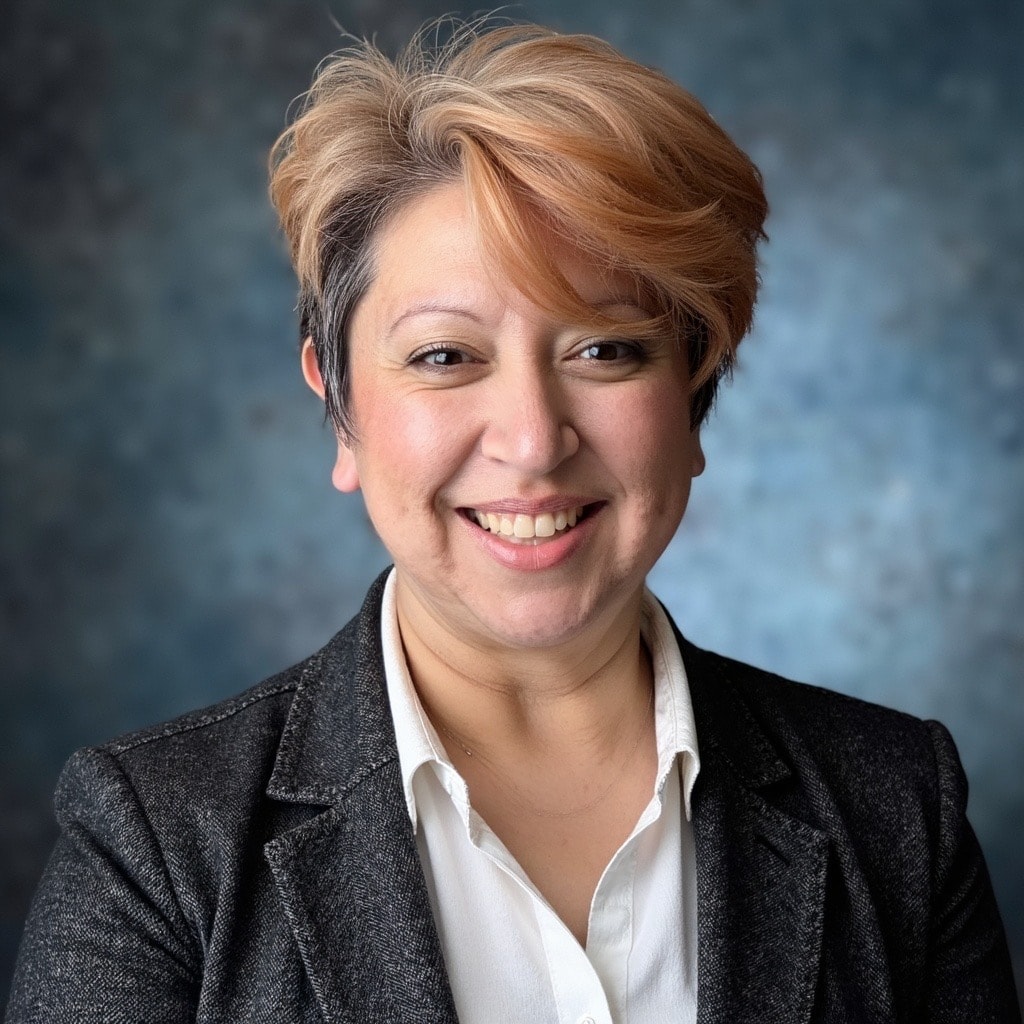
Rosanna "RoRo" Hudson did not set out to specialize in transportation and logistics real estate. The work found her the way good questions often do, one industrial client at a time, until the building stopped being the point.
Along the way, Hudson stopped seeing herself as a broker who happened to serve transportation clients and started seeing herself as part of the transportation community. That shift — curiosity over agenda, relationships over transactions, and speaking up before she felt fully ready — is the through-line of her career.
The Path That Found Its Niche
You have built a career spanning multiple areas of real estate and business, but today you work directly at the intersection of industrial real estate, transportation, and logistics. Take me back to the beginning: how did your career actually start, and how did you find your way to this particular niche?
I did not start my career thinking, "I am going to specialize in transportation and logistics real estate." It evolved organically. I started commercial real estate and was fortunate to be exposed to different sides of the industrial real estate business early in my career. As I worked with more industrial users, I became increasingly involved with companies whose real estate was directly tied to how they moved products, served customers, parked equipment, maintained fleets, and managed their operations.
Transportation/logistics real estate fascinated me because the building is only one piece of the puzzle. A warehouse can be beautiful and still be completely wrong for a trucking company. You have to understand the yard, the docks, trailer parking, circulation, access, zoning, nearby highways, and, most importantly, how the company actually operates. Over time, I realized that was where I could bring the most value. I wasn't simply finding buildings; I was helping solve operational problems through real estate.
Your career path has included different roles, markets, and business environments. What did those different chapters teach you that you now bring to transportation and industrial clients?
Every chapter gave me something different. Working in traditional commercial real estate taught me the fundamentals of transactions, negotiation, market knowledge and understanding value. Working in different markets taught me that you cannot assume what works in one city or submarket will work somewhere else. And working in different business environments taught me how important it is to understand the client's business before trying to solve their real estate problem.
I have also been on different sides of the table throughout my career, and that has helped tremendously. You learn to listen differently. Sometimes the stated requirement is not actually the real requirement. A client may tell me, "I need 50,000 square feet." My job is to ask, "Why?" What are you doing with those 50,000 square feet? What is changing in your operation? How many trucks? How many trailers? What does your customer base look like? Where are your employees coming from? What is your growth plan? Those questions usually tell you much more than the square footage does.
The Question That Opens the Door
You have spoken publicly about the importance of asking better questions and about opportunities that emerged because you were willing to ask. Was there a particular question, conversation, or moment when speaking up materially changed the direction of your career?
There have been several, but the larger lesson for me has been learning not to be afraid to ask. Some of the best opportunities in my career came because I asked a question, introduced myself, followed up, or said, "Have you considered this?" when it might have been easier to stay quiet. I have learned that asking questions is not a sign that you do not know something. Quite often, it is how you uncover what everyone else has overlooked.
That carries directly into how I work today. I am naturally curious about people's businesses. I want to understand why they do something a certain way, what is frustrating them and what they would change if they could. That curiosity has opened doors professionally, but more importantly, it has helped me become a better advisor.
Was there a point when you realized you were no longer simply building a career in real estate, but had developed a real connection to the transportation and logistics industry?
I think it happened gradually. The more transportation clients I worked with, the more I realized I genuinely enjoyed the people and the industry. Transportation is very tangible. You can see what these companies do every day. Freight has to move. Trucks have to get in and out. Drivers need somewhere safe and functional to operate. Equipment has to be maintained. Customers have deadlines. Then I became more involved with the transportation community itself, particularly through organizations like the Transportation Club of DFW. That changed the relationship even further. I wasn't simply a real estate broker serving transportation clients anymore. I became part of the transportation community.
What the Tour Doesn't Show You
Most people see the truck, trailer, warehouse, or distribution center but rarely think about the real estate decisions underneath the operation. When a carrier or logistics company comes to you looking for a facility, what are you evaluating that someone without transportation-specific experience might miss?
The first thing I want to understand is the operation, not the building. I am looking at how trucks enter and exit, how trailers circulate, where they stage, whether there is enough room to maneuver, whether trailer parking is actually usable, dock configuration, employee parking, security, zoning, outdoor storage restrictions, repair capabilities and proximity to the transportation network. I am also thinking about what happens at 6:00 Monday morning when the property is fully operational — not what it looks like at 2:00 in the afternoon during a property tour. That distinction is important. A property can check every traditional real estate box and still create friction every single day for a transportation operator.
For a trucking company specifically, what can make a property look ideal on paper but become an operational nightmare in practice?
A beautiful building does not necessarily make a good transportation facility. You can have the right square footage, attractive rent and excellent office space, but if a 53-foot trailer cannot comfortably maneuver through the site, none of that matters. Insufficient trailer parking is another major issue. So are narrow entrances, poor turning radiuses, shared truck courts, restrictions on outdoor storage, limited ingress and egress, inadequate dock positions or neighbors who are incompatible with a 24/7 transportation operation. The worst problems are often the ones that seem small during a tour but happen hundreds of times a week once the company occupies the property.
Have you ever had to tell a transportation or logistics client, "This property is wrong for you," even when the building itself looked attractive or the financial terms appeared appealing? What red flags make you willing to walk away?
Absolutely. Part of representing a client well is being willing to tell them when something does not work, even if everyone is excited about the deal. Sometimes the best deal I can help a client make is the one they don't make.
The Voice Missing From the Room
When developers, municipalities, real estate professionals, and transportation operators discuss industrial growth, whose voice is most often missing from the room?
Often, the people actually operating the equipment. Drivers, dispatchers, terminal managers, maintenance teams and warehouse operators have incredibly valuable perspectives because they experience the consequences of design decisions every day. A developer may see a site plan. A driver sees whether that turn actually works with a 53-foot trailer at 2:00 in the morning. Both perspectives matter.
Do you believe enough decision-makers involved in industrial development truly understand what a professional driver experiences when entering, navigating, staging at, or leaving the facilities being built? What would change if drivers had a greater voice in those conversations?
I believe it would. Professional drivers can identify practical issues that are easy to miss on drawings: turning movements, visibility, staging, gate placement, congestion, safe parking and how trucks interact with passenger vehicles. I would love to see more operational input incorporated earlier in the design process. Sometimes a relatively small design decision made before construction can eliminate an operational problem that otherwise exists for decades.
Showing Up for the Community
You have been involved with the Transportation Club of DFW for many years. What made you commit not simply to attending industry events, but to helping build and sustain an industry community?
Because I believe you get much more from an industry when you participate in it rather than simply sell to it. The Transportation Club of DFW has given me relationships, education, friendships and a deeper understanding of transportation beyond real estate. I wanted to contribute to that. Whether we are creating educational programs, scholarships, mentorship opportunities or simply putting people in the same room who might be able to help one another, I think there is tremendous value in building community. The stronger those relationships are, the stronger the industry becomes.
Relationship-building is a recurring thread throughout your career. In industries where "networking" can sometimes become transactional, what does a genuine professional relationship look like to you?
For me, it starts with curiosity rather than an agenda. I genuinely enjoy learning what people do and figuring out how I might connect them to someone or something useful. Sometimes that produces business for me. Often it doesn't — and that is perfectly fine. I have always believed that if you consistently provide value, make introductions, share information and show up for people, relationships develop naturally. The best networking question is rarely, "What can this person do for me?" It is, "What can I learn about this person, and where might I be able to help?"
Being a Woman in Both Rooms
You have built a career across commercial real estate and transportation, two spaces that have historically been heavily male-dominated. Have there been moments when you felt you were navigating barriers in both at the same time? What did that experience teach you?
Certainly. Commercial real estate and transportation have both historically been male-dominated, and there have been times throughout my career when I was the only woman — or one of very few women — in the room. Early on, I sometimes felt that I had to prove that I understood the business before my perspective carried the same weight. What that taught me was to know my business, ask questions and not be afraid to speak. I also learned that I don't have to approach the business exactly the way someone else does. Relationship-building, curiosity, listening and connecting people are strengths. Those qualities have become a very important part of how I conduct business. And today I am encouraged by how many talented women I see building careers and leadership positions across transportation, logistics and commercial real estate.
What did building this career give you that you do not believe you would have gained in another field?
Perspective and relationships. I have walked warehouses, terminals, yards, manufacturing facilities and properties in markets all over the country. I have sat across the table from business owners, drivers, executives, developers, landlords and entrepreneurs. You begin to understand how interconnected everything really is. A truck on the highway, a product on a shelf and a package arriving at someone's door all have an enormous network behind them — people, facilities, infrastructure and decisions most consumers never see. Being part of that world has given me tremendous respect for the people who keep it moving.
One Final Question
What is something I did not ask that you wish more people understood about you, your work, women in transportation, or the often invisible infrastructure that keeps freight moving?
I wish more people understood that freight does not move through buildings; it moves through systems. The warehouse, truck terminal, yard, highway, driver, maintenance facility, distribution network and workforce are all connected. Commercial real estate is one part of that infrastructure, but when we make real estate decisions without understanding the transportation operation, we create inefficiencies that someone else eventually has to absorb — often the driver or operator.
I also wish more people understood how relationship-driven this industry really is. Transportation is enormous, but the community can feel remarkably small. People remember who helped them, who made an introduction, who answered the phone and who showed up. That has shaped the way I approach both my career and my involvement in the transportation community.
And for women entering transportation or commercial real estate, I would say: do not wait until you think you know everything before you speak up. Ask the question. Introduce yourself. Walk into the room. Learn the business. Your perspective belongs in the conversation.
Rosanna "RoRo" Hudson is a commercial real estate broker with Logistics Industrial Realty. She is licensed in Texas and California. Her industry involvement includes the Transportation Club of Dallas / Fort Worth (TCDFW).